Tuesday, April 29, 2014

When Wall Street becomes a landlord

real estate investing

The stronger-than-expected housing recovery -- a 20% rebound since 2010 -- owes a lot to the investors who swept into recession-ravaged cities and scooped up distressed homes.

Nowhere has that been truer than in the suburbs ringing Atlanta, where rampant overbuilding and economic woes produced a flood of foreclosures.

At the same time, the local rental market couldn't absorb all the displaced owners. That combination proved irresistible to mom-and-pop investors, whose all-cash purchases stabilized the market: Atlanta home prices rebounded from a 12.7% decline in 2009 to flat in 2010.

Related: Cities where the real estate deals are

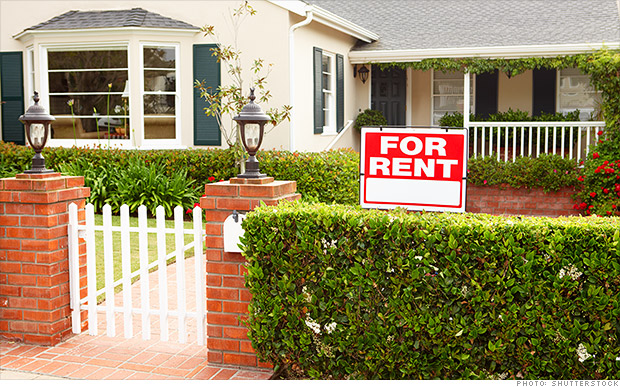
Then Wall Street came to town. This second wave of housing investors is spending billions to flip foreclosures into single-family rentals. In January one in every four homes sold in Atlanta went to a large investor, four times the national average, says RealtyTrac.

"They're coming from all over, even out of the country," says Atlanta agent and property manager Scott Goeber.

In June 2012 the Atlanta office of real estate manager Waypoint Homes was "me and my cellphone," says regional director David Zanaty. By last fall he had hired 50 people and bought 600 homes, and hoped to own 1,500 by March.

Large investors are swarming local markets. Real estate powerhouse Blackstone has spent $8 billion to buy 43,000 homes nationwide. American Homes 4 Rent has spent $3.5 billion on 21,700 homes.

Now these buying sprees are being converted to investments.

Since December 2012, four single-family home real estate investment trusts, similar to REITs that own apartment buildings or shopping centers, have opened up to individual investors. American Homes 4 Rent's (AMH) is the largest; most recently Waypoint merged with the home-rental division of Starwood Property to form Starwood Waypoint Residential Trust (SWAY), a REIT that owns close to 5,800 homes.

Plus, a new breed of bonds, which bundle rents from single-family homes, is being peddled to institutional investors, such as pension managers or mutual funds. Last October, Blackstone rolled out a $479 million bond backed by 3,207 homes in five states. Deutsche Bank estimates that another $5 billion in home rental bonds will hit the market this year.

So far investors have not been enthusiastic. Some of Blackstone's bonds are selling below the offer price, and most of the REITs have underperformed their index. The business model is too new, says Brad Thomas, editor of iREIT Investor.

The biggest firms expect to generate 5% to 7% a year in return from rents, according to a Bank of America report. But that hinges on keeping down the cost of maintaining far-flung homes.

"If a toilet breaks, you've got to send someone to fix it," Thomas says. "It's difficult to do that efficiently. In an apartment complex, a property manager can walk the building."

Related: Dreary outlook for formerly hot housing markets

And REIT investors shouldn't count on big price gains. "It's unproven how their asset value will grow in a more normal market," says Forward Real Estate Long/Short manager Ian Goltra.

Plus, the REITs have been plowing capital into buying homes, not paying big dividends. And yield is a big reason to own REITs, notes Goltra. Top apartment REITs currently pay more than 4%. The highest available yield in a single-family rental REIT is 1.2%.

"It's early days," says Goltra. "For now, they're too risky." To top of page

Thursday, April 24, 2014

Ready to renovate? Here's your first move

couple renovation

When the real estate market was in the dumps, snagging a great contractor was a simple task. With few people remodeling, no project was too small for hungry pros, many of whom were bidding at 10% to 40% below their boom-time rates.

Those days are gone. Remodeling spending is now up 30% from its low point, and single-family construction spending has doubled. Depending on where you live, a project that cost $50,000 in 2010 might now come in at $60,000 to $70,000.

"Materials costs are up, much of the skilled labor pool has jumped to the oil and gas industry, and contractors' phones are ringing," says Bernard Markstein, U.S. chief economist at Reed Construction Data.

To get the best help, you'll need to be strategic.

Start with referrals. Begin by polling friends and tradesmen, and tell the contractor who pointed you in his direction.

Using a referral will do more than just ease your mind -- it will also make you a priority for the pro, who wants to keep his clients and subcontractors happy.

Related: 4 tips from a serial home remodeler

Don't be vague. When you reach out, show that you've put careful thought into the project by expressing a clear vision of what you want to accomplish and a sense of what you can spend.

"Bidding on a job takes about a dozen hours," says Boston renovation consultant Bruce Irving. "He's not going to bother unless he thinks you're serious."

Get his opinion. When a contractor comes to see the job, don't jump right into discussing price. First ask for his input on the plan and on any initial sketches your architect has put together. This shows you value his knowledge and don't just see him as a nail banger.

Plus, his answers will show you how he thinks -- and whether you want to hire him. Is he channeling what you want? Great. But if he suggests lazy solutions or pricey add-ons, move on.

Now negotiate. Solicit bids from three or more contractors. Be sure to stoke competition by letting them know that you're gathering multiple offers. Skip any bids that are wildly high or low.

Related: Make your old house look new again

Should your first choice still be over your budget, haggling is risky: He'll probably either walk or cut corners on the project. Instead, let him know how much he's over, and ask for some suggestions on how he might tweak the job to lower the price with minimal impact, says UCLA law professor Russell Korobkin, a negotiation specialist.

Remember to hold out a contingency of 10% to 20%, since many remodels mushroom over the course of the project.

Be flexible. This is also the time to nail down scheduling. Ask him for approximate start and end dates. But don't press too hard. For a top contractor, at a fair price, you may to have to wait a bit. To top of page

Tuesday, April 22, 2014

Vacation home market heats up

vacation home sales

More Americans felt rich enough to invest in vacation homes last year as the economy continued its recovery.

Annual sales jumped nearly 30% to 717,000 homes, according to the National Association of Realtors. Vacation home sales represented 13% of the total market, their highest share since 2006.

The median price rose to $168,700, up 12.5% from a year earlier.

Related: Cities where the real estate deals are

The sales were spurred by a strong stock market, according to Lawrence Yun, chief economist for the National Association of Realtors. The S&P 500 piled up a whopping 30% return in 2013, its best performance in 16 years. That provided investors with the funds and the confidence to purchase recreational property.

Some of the buys were made by speculators looking for quick profits. About 5% of buyers turned the properties over before the year was out and another planned to sell within 12 months of purchase.

Related: Buy vs. rent -- What you'll pay in 10 big cities

The main reason cited for buying was to use the homes as family vacation retreats. But 31% of buyers also said they planned to eventually use the homes as primary residences, often after they retire.

More than a quarter of buyers said the purchase was to take advantage of good deals or to diversify their assets. Almost as many planned to rent to others, at least part of the year.

Calculator: Was my home a good investment?

NAR's report also covered purchases of second homes for investment purposes. Those sales fell 8.5% year-over-year to 1.1 million.

"Investment buyers slowed their purchasing in 2013 because prices were rising quickly," said Yun, who also cited the drop in the number of foreclosures available for the decline. To top of page

Thursday, April 17, 2014

Housing heats up in booming growth cities

booming growth cities tampa
NEW YORK (Money Magazine)

To sort out what you can expect in real estate this year, MONEY zeroed in on four markets: upscale neighborhoods, new investor favorites, booming growth cities, and once-busy areas that have quieted down. Whether your local real estate market is heating up or cooling off, here's what you need to know about buying, selling or renovating your home.

BOOMING GROWTH CITIES

Areas with strong job growth and swelling populations should post big gains this year, says CoreLogic chief economist David Stiff. This may sound like common sense, but it hasn't always been the case: In 2013 the largest price increases were in places that attracted investor buyers, who were drawn by good deals, not good jobs.

For sellers living near major employment hubs or in mushrooming technology hotspots, 2014 is shaping up to be a good year. Buyers, though, will face higher prices and fewer available homes, due in part to competition from relocating workers. In job-creation juggernaut Fort Worth, for instance, there's now just a three-month supply of homes on the market (in January the U.S. average was nearly five months).

How you'll know: Check local stats at bls.gov/eag. Look for upward trends in the number of new jobs and a falling unemployment rate that's lower than the national average (6.6% in January). To see if your town is headed the way of Fort Worth, compare your area's "median age of inventory" numbers on Realtor.com's Trends page with the U.S. average (115 days in January). A lower number is a sign of a tight market.

BUYERS

Be a creative shopper. Sign up for immediate new-listing alerts from your multiple-listing service, realtor, and sites like Zillow, which includes for-sale-by-owner houses that may not show up elsewhere. Zillow also has Make Me Move listings: homes that aren't currently for sale, but where owners have posted a price they'd consider.

Related: 10 fastest growing cities

Can you afford a premium of 10% to 15% over an existing house? You may also be able to dodge competition by shopping for a new home. A caveat: Most builders are postponing construction until they have a buyer, so you won't be able to move in for at least four to six months, says Stephen Melman of the National Association of Home Builders.

Be mindful of rates. The average interest rate on a 30-year fixed loan is predicted to climb from the current 4.4% to 5.3% by the 2015 spring buying season, according to Freddie Mac. For a $250,000 loan, that means that a borrower who waits would pay $136 more per month and an additional $49,090 in interest over the life of the loan. Will you need a big loan? Better to act soon before rates tick up.

Calculator: How much house can you afford?

Go beyond a pre-approval. Stand out by collecting all your paperwork and going through underwriting before you shop. "That's almost as good as cash," says Betty Taisch of the San Francisco Association of Realtors. After you make an offer, ask your lender to call the listing agent to confirm you're ready to go.

Don't give up if you lose a bidding war. Deals can fall apart, so check in with the listing agent weekly until the sale closes. "It is a great way to sneak in with little competition," says Taisch.

SELLERS

Don't get greedy. Better to price low and receive multiple bids than aim too high and have to cut. Use the past three months of sales data to find a good number.

Multiple bids? To increase chances of a smooth sale, you or your listing agent should call each buyer's lender to verify that he has been vetted and can move quickly. With inventory tight, you may also want to negotiate to stay in the home for a month or two until you've found a new place.

OWNERS

Price a remodel. Like your neighborhood but ready for an upgrade? Look into renovating before you consider a move. Get bids from at least three contractors to assess the cost of improving your current home. Then compare that figure with the price of relocating. Selling a $350,000 home, for instance, you'd pay $21,000 (or 6%) to your agent -- and that's before closing and moving costs. For that, you could redo a master bath or upgrade a kitchen.

More Real Estate Guide 2014

Upscale neighborhoods 
New investor favorites 
Once-hot housing markets, now not 
Booming growth cities To top of page

Monday, April 14, 2014

Dreary outlook for formerly hot housing markets

once hot las vegas

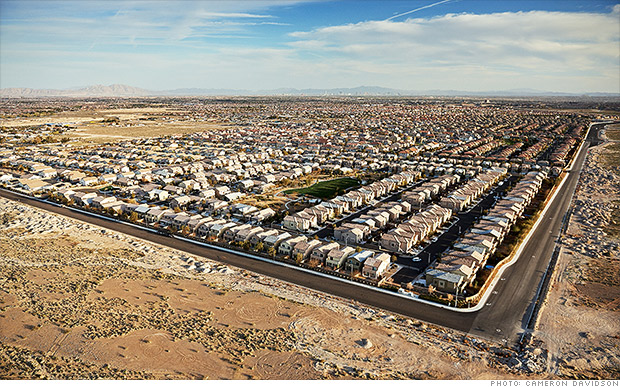
Las Vegas, the poster city for last year's recovery has finally seen price growth cool.

NEW YORK (Money Magazine)

To sort out what you can expect in real estate this year, MONEY zeroed in on four markets: upscale neighborhoods, new investor favorites, booming growth cities, and once-busy areas that have quieted down. Whether your local real estate market is heating up or cooling off, here's what you need to know about buying, selling or renovating your home.

ONCE-HOT HOUSING MARKETS, NOW NOT

During the past couple of years investors swooped in to snatch up deals in cities clobbered by the crash, driving up prices. But with that low-hanging fruit gone, these markets are now cooling off. In 2014 they should see less impressive price hikes and far more homes for sale. And if rates rise, these areas could get even flabbier, since last year's price jumps put many homes out of reach for locals.

Related: 10 fastest growing cities

How you'll know: Your first clue is the amount that area home values increased in 2013. Look at Realtor.com's Trends page: Anything over 15% is in the pocket. A big jump in the number of homes for sale is another giveaway. (Think Sacramento, which saw December available listings spike 58% from a year earlier.) Check the page's Total Listings column to see whether your area has had a similar increase.

BUYERS

Take your time. While most of these areas aren't quite a buyer's market, you'll have more choices and power than last year, so don't rush into a place you don't love.

Ask for extras. You may want to build in a clause that says your offer is contingent on your ability to get financing or to sell your current home.

Bid low. When markets start to slow down, sellers get nervous -- and pliable, says Los Angeles agent Connor Maclvor. Ask your realtor to send you listings where the price has been cut. Those sellers are the most eager, says Maclvor; set your bid at 8% to 10% under asking.

SELLERS

Court bargain hunters. A year ago Phoenix sellers could price above similar listings and still get 10 bids in the first week, says agent Greg Markov: "Not anymore." Now you want your house to look like a deal, he says.

Check current asking prices for comparable homes, then price your house near the bottom of the range. Two weeks and still no offer? Cut it by 5%.

Calculator: Was my home a good investment?

Max out your listing. Choose an agent that offers pro photos. Homes that have them sell faster and for up to 3% more, according to Redfin. Go beyond Realtor.com, Trulia, and Zillow by posting your house on Craigslist. Make sure that your agent is promoting it on Facebook, Twitter, and Pinterest.

Creating a video for your listing (or to post on YouTube) is another option; 12% of sellers tried it last year, says NAR. If you go that route, walk the camera through the home, since buyers want to see the layout, says Princeton, N.J., broker Henderson.

First impressions count. With more competition for buyers, the focus on curb appeal and staging is back. Be sure your front yard looks neat, pressure-clean the roof, and repaint your front door. Inside, eliminate all clutter. A professional stager can suggest paint colors and lighting and furniture arrangements that will help your place look its best; a two-hour consultation typically costs $150 to $400, according to contractor referral site Fixr.com.

OWNERS

Don't panic. This isn't another bust: Your home will still appreciate. In fact, CoreLogic predicts that prices in last year's hottest 20 markets will rise at an average annual rate of 3.7% through 2018, vs. 3.1% nationwide. Keep those numbers in mind if you're thinking about remodeling. Smaller projects that bring your home in line with your neighbors' will pay off, but you're unlikely to see big enough gains to justify a massive renovation.

More Real Estate Guide 2014

Upscale neighborhoods 
New investor favorites 
Once-hot housing markets, now not 
Booming growth cities To top of page